
How to Write a Panto Joke
Construct, Confirm, Confuse: The Three Beats Behind Every Decent Groan
Panto comedy runs on the groan as much as the laugh, and there's a reason for that. A proper panto joke does two things in the space of one line: it lands a laugh, and it tells the audience they're allowed to enjoy something a bit daft. I've been writing these scripts for years now, and the mechanics behind a good line are often far more deliberate than they look from the stalls.
Construct, Confirm, Confuse
I think about most jokes in three beats. The construct sets up the joke, giving the audience the information they need without telling them where it's going. The confirm points them a little further in that direction, just enough to make the destination feel obvious. The confuse is the punchline, and it lands somewhere else entirely.
The Card Guard in Alice in Wonderland are an excellent example of all three, and this one borrows its construct straight from the original story, so the audience already half-knows where it's going before anyone's said a word: the cards are going to paint the roses red, which we all know from the original, so far so straightforward. The confirm is the Ace explaining the job: "Orders from the Queen. We paint the roses red. All of them." "Why aren't they red already?" "Because someone planted white ones by mistake." That grounds the joke in logic the audience already recognises from Lewis Carroll's original. The confuse then arrives in two goes rather than one. First, a box of Roses chocolates turns up instead of roses the flowers, an initial confuse on its own. That's followed by a secondary confirm, "the Queen wants me to read her the selection options," since reading out the selection is exactly what you'd do with a box of chocolates. The second, final confuse is the punchline itself: "the Roses read," heard as reading the label on a chocolate box rather than the red colour that's been the whole point since the original story.
The confirm step isn't always necessary, though. If the construct on its own is strong enough, the confuse can arrive straight away with no middle beat at all. Gerald the Herald in Sleeping Beauty does exactly this, worrying aloud about where his trumpet duties might land him, saying he doesn't want to go to the guillotine, then confusing us straight away with "that's not where I want to be-heading." There's no separate confirm step there. The construct, the guillotine, and the confuse, "be-heading," sit right next to each other, and it still lands because the construct alone is carrying enough weight to make the twist work.
The Best Jokes Don't Always Need a Pun
Not every laugh needs wordplay. King Rat in Dick Whittington gets one of the biggest laughs in the show without a single pun: "How are we supposed to spread disease and pestilence when public services are going round cleaning everything up? I hate the council!" The construct and confirm are just a villain stating his evil plan and the obstacle in its way. It lands because most of us have our own gripe with the council over something not getting collected or cleaned often enough, so hearing a villain complain about the exact same thing is funny precisely because there's no wordplay in it anywhere, just a straight inversion: any normal person wants the council doing its job, and King Rat, being the baddie, wants the opposite.
Physical Comedy Doesn't Need a Line Either
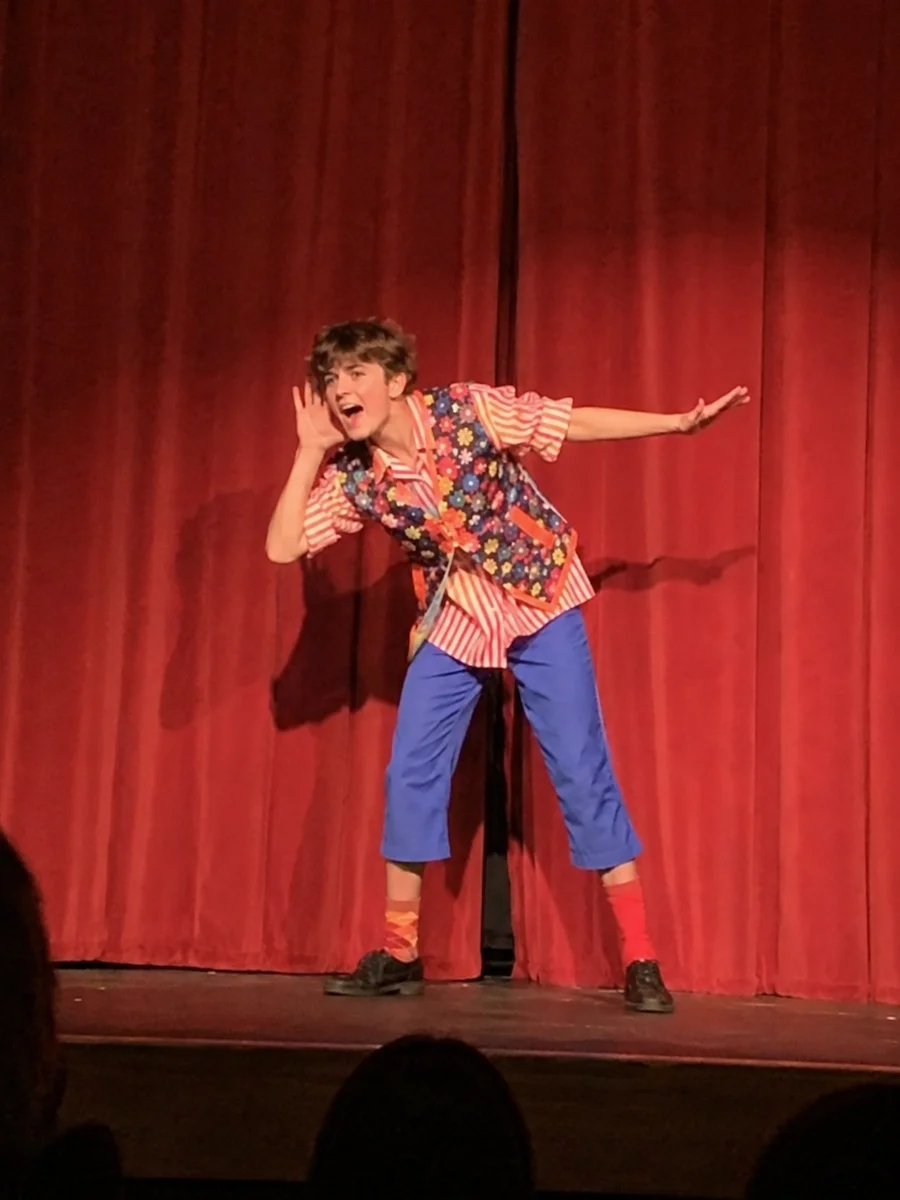
Sometimes the joke isn't in the dialogue at all. In Snow White, the Prince and Dame Babs have a scene built around a giant teddy bear that keeps blocking each of their view of the other. Neither of them can see who's actually standing right next to them, and that's the whole joke, no punchline required. It works because the audience can see exactly what neither character can, which is a kind of confuse that only works on a stage, not on the page.
Audience Participation: When the Crowd Solves It With You
The best participation moments do more than get a laugh, they actually help move the story along. In Aladdin, there's a running call and response where the audience shout "Frankie Twankie's Manky Hanky." It's a strange thing for a whole room of people to shout, and in the final scene, that response inspires Aladdin and helps resolve the plot and bring the story to a close. That's a different kind of joke to the others in this post. The audience isn't just laughing at the gag, they're actively part of solving it, which is about as purely pantomime as comedy gets. It only works live, and it only works because the audience has been involved right from the start, which is exactly what helps the goodies win in the end.
Why This Matters When You're Choosing a Script
If you're working through a stack of Perusal Scripts trying to settle on a show, read the jokes aloud rather than just on the page. A line that looks flat in print often lands properly once it's spoken, because the audience needs that half-second of confusion to do its work.
For more on how comedy lands once you're actually on stage in front of a real audience, have a look at Pantomime Comedy: How to Make It Work. Or start on our home page and browse all our pantomime scripts to see the catalogue for yourself.
If you'd like to read one of my own scripts and judge the jokes for yourself, request a free Perusal Script here, no obligation, and I'd love to know which lines get the biggest groan in your rehearsal room.