
What Makes a Good Pantomime Villain?
The art of being magnificently, memorably bad
When I’m writing a new script I often think about why it is that audiences remember the villain longest. and when you ask someone which character is most memorable they'll usually name the dame or the villain first. The hero gets the happy ending. The villain gets the reputation. And if the villain doesn't work, very little else does either and this can be seen all the way from the traditional pantomime stories to the more modern and up to date script titles. A limp pantomime villain makes the hero's triumph feel hollow, the comedy feel safe, and the whole show feel like it's missing its spine.
I've written pantomime villains across mutiple scripts, from wicked queens and sorcerers to pirates and scheming bailiffs. The craft questions that come up are always the same. What does the villain actually need to do? How much should they play it for laughs? And where exactly is the line between someone the audience loves to hate and someone they simply don't believe in at all?
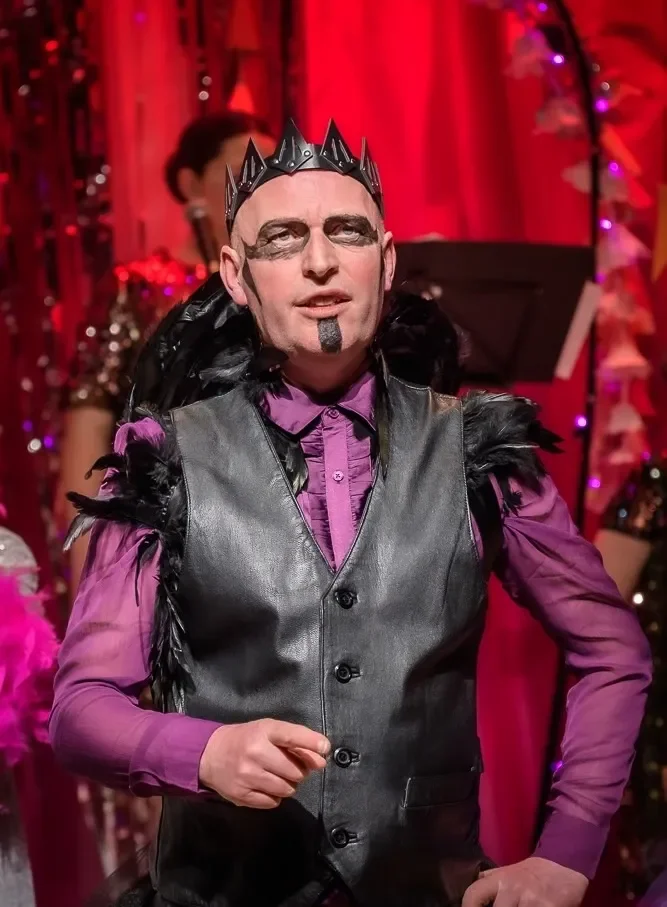
The Villain's Job Is Not to Be Evil
This is the thing that trips up a lot of first-time panto directors. The villain's job is not to be evil. The villain's job is to make the audience feel something, and that something is a combination of threat and delight.
Pantomime sits in a very specific theatrical tradition. The audience knows perfectly well that the villain won't win. They have known this since approximately thirty seconds into the show. What they are there for is the ride, and the villain controls the pace and temperature of that ride more than any other character. Every time the villain enters, the energy changes. Every time the villain reveals a plan, the story moves forward. Every time the audience boos, they are actively participating in the drama rather than passively watching it.
That booing matters more than directors sometimes realise. Pantomime is one of the very few theatrical forms where the audience is both permitted and actively encouraged to respond out loud in real time. The villain is the primary mechanism that makes this possible. If the audience doesn't boo, something has gone wrong.
Menace and Comedy Are Not Opposites
The biggest mistake I see in panto villainy is the choice between playing it seriously or playing it for laughs, as though these are mutually exclusive options. They aren't. The best pantomime villains do both at once, and the craft lies in knowing which one to lead with in any given moment.
Real menace does not require shouting. A villain who speaks quietly and moves deliberately can unsettle an audience far more than one who rages and stomps around the stage. Quietness, stillness, and the occasional very deliberate pause can do extraordinary work. When the villain is calm about what they're about to do, the audience tends to believe them.
The comedy comes from a different place: status, self-regard, and the gap between how the villain sees themselves and how the audience sees them. A villain who believes absolutely in their own superiority is funny. A villain who is constantly surprised that the hero keeps escaping their elaborate plans is funny. A villain who delivers a long and elaborate monologue about their scheme, turns to the audience for approval, and doesn't get it, is very funny. None of this undercuts the menace, provided the menace is there underneath.
The useful note I give to any actor playing a villain in one of my panto scripts is this: the villain believes they are the hero of the show. They have good reasons for what they do, at least in their own mind. Play the conviction, and the comedy and the threat will both follow naturally.
The Audience Relationship
Pantomime villains have a unique and slightly paradoxical relationship with the audience. They are adversarial figures, but they frequently speak directly to the audience, share their plans, and treat the front few rows as unwilling confidants. This is one of pantomime's oldest conventions, and it still works because it gives the audience a kind of complicity in the villain's schemes, even while they are collectively booing.
The direct address requires commitment. A villain who glances nervously toward the audience, or who delivers their aside too quickly or too quietly, loses the effect immediately. The aside has to land as a real communication, as if the villain cannot believe they have to explain this to all these people. The contempt should feel warm enough to be funny and real enough to sting slightly.
What you want is an audience that boos enthusiastically, warns the hero loudly, and still secretly waits for the villain to come back on. That's the benchmark.
The Henchman Problem
Most pantomime villains have at least one comic henchman, and this relationship is one of the more delicate balancing acts in the show. The henchman, or sidekick, exists to give the villain someone to react to, to create physical comedy, and to provide a slightly lower-stakes version of the villainy that takes the edge off between more intense scenes.
The risk is that this character outshines the villain. A very funny comic sidekick can inadvertently domesticate the villain, making them feel less threatening and more like the straight man in a double act. The solution is not to rein them in, but to make sure the villain has at least a few scenes where they are operating entirely alone or in menacing territory, away from the slapstick.
The reverse is just as risky, where a villain is so committed to playing it seriously that they refuse to engage with their sidekick's comedy at all. This creates a tonal whiplash for the audience and makes both characters harder to follow. The villain can be the straight man in certain moments. What they cannot do is appear not to notice that there is comedy happening around them.
Casting the Villain
Villains are often undercast. Societies sometimes put their best comic performers in the dame and the comic roles and cast the villain as an afterthought, because the villain appears to be simply "the serious one." This is a significant miscalculation.
A good pantomime villain needs range. They need the ability to hold stage alone, to project authority, to time a comedy beat without breaking the menace, to lead a scene rather than react in one, and to sustain audience engagement across what are sometimes the show's most technically demanding passages. This is not an easy ask.
When I'm thinking about how a villain is written in any of my scripts, I'm thinking about an actor who can do all of those things. The role is written to reward that range. Casting someone who can only do one of them will leave significant material on the floor.
If you're directing and casting a villain from a smaller pool of performers, the most important quality to look for is vocal authority and the confidence to hold a pause. Timing can be worked on in rehearsal. Presence is harder to teach from scratch.
You can also check out our blog post on pantomime characters to see how casting the villain fits in with all the others too.
Villains Worth Looking At
My scripts include a range of villain types precisely because the form supports more variety than a single template allows. The evil Queen Devilia in Snow White is a different proposition from the Sheriff of Nottingham in Robin Hood, and both differ again from Captain Hook in Peter Pan. What runs through all of them is conviction, presence, and a relationship with the audience that goes beyond simply being disliked.
If your society is choosing a script and the calibre of available villain casting is a factor, read each script with that specific question in mind. Request a Perusal Script and spend some time with the villain's scenes before you decide. You'll know fairly quickly whether you have the right person for the role, and whether the role suits what that person can bring.
The full catalogue of available panto scripts covers a range of villain styles, settings, and demands, and our home page points you at the rest of what we do. There's almost certainly one that matches what your group does well.
The villain might not get the happy ending. But for what they give the audience, they usually win.