
The Pantomime Dame: A Complete Guide
The pantomime Dame wears a frock the size of a small marquee, addresses the audience as though they owe her money, and steals every scene she is in. She is loud and broad, and one of the most technically demanding roles in the whole tradition. A show with a good Dame crackles, and a show without one merely runs. This guide covers where she came from, who should play her, how to play her, and how to direct her.
Whether you're casting a Dame for the first time, taking on the role yourself, or simply trying to understand why this character has endured for centuries, this guide covers all of it.
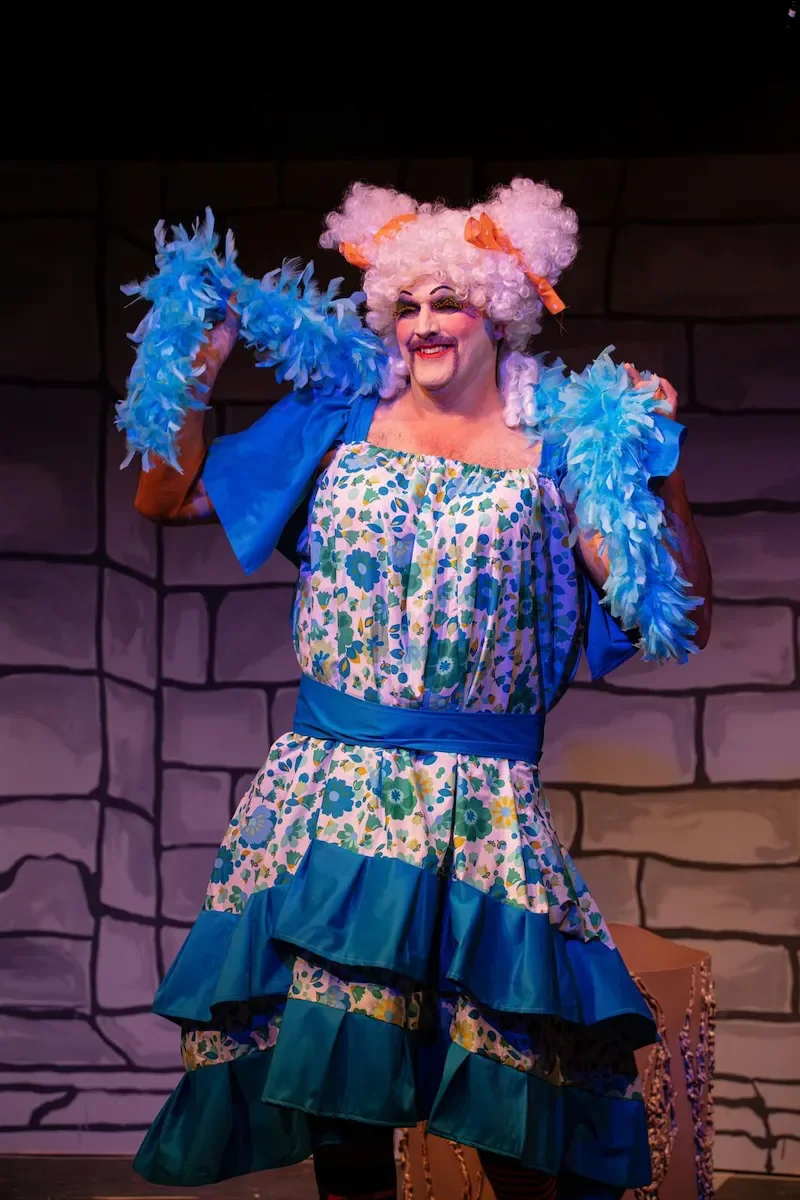
Where Did the Dame Come From?
The pantomime Dame is older than most people realise. Her roots reach back to the Italian commedia dell'arte tradition of the sixteenth and seventeenth centuries, where stock characters including the scheming, ridiculous Pantalone established the template for comic older figures who exist to be humiliated, outwitted and adored in equal measure.
English pantomime picked up those stock characters and ran with them. By the eighteenth century the harlequinade tradition was well established, with knockabout comedy played by a rotating cast of archetypes. The Dame as a specific figure, a woman played by a man for maximum comic effect, became a defining feature of Victorian pantomime, and the great music hall performers of the nineteenth century turned her into an art form. Dan Leno and Herbert Campbell became nationally famous for their Dame performances at the Drury Lane pantomimes. Audiences didn't merely accept a man in a dress, they demanded one, and they expected brilliance.
The tradition stuck because of what the cross-dressing enabled: a kind of licensed absurdity that sits just outside normal theatrical reality. The Dame is a comic force of nature with no interest in realism, and the audience's knowledge that there's a man underneath the wig is part of the joke rather than a disruption of it. The modern amateur pantomime Dame has inherited all of that, and carries several hundred years of theatrical tradition on her presumably very large shoulders.
The Role the Dame Plays in the Story
Every pantomime has its own Dame, usually the protagonist's mother or a close surrogate: Widow Twankey in Aladdin, the Ugly Sisters in Cinderella, Dame Trot in Jack and the Beanstalk, Sarah the Cook in Dick Whittington. The name and the relationship vary by script; the structural role doesn't.
She is the audience's closest companion. While the hero and heroine are earnestly pursuing love and adventure, the Dame is the one looking back at the stalls, rolling her eyes at the villain, and confiding in the children in the front row as though they're her oldest friends. She's the audience's delegate on stage, and she's usually the primary comic engine as well. Most of the show's biggest laughs belong to her, which is why casting her is one of the most consequential decisions any director makes: when she works the show lifts, and no amount of good staging compensates when she doesn't.
Who Should Play the Dame?
Tradition says the Dame should be played by a man, and the tradition holds up for a reason. The juxtaposition of a masculine physicality and an extravagantly feminine costume generates a particular kind of comedy that's hard to replicate any other way. That said, this is amateur dramatics and your casting pool is what it is. The quality of the performance matters far more than the gender of the performer.
What you're looking for, regardless of gender, is a specific set of qualities. She needs physical confidence and comfort with being watched, because the Dame is never not being watched, and she needs timing, which is a different skill from being funny. She needs warmth, because a Dame who doesn't like the audience and a Dame the audience doesn't like are both disasters. And she needs stamina, because it's a long role with a lot of quick changes, a lot of physical comedy and a lot of direct address that has to land every night.
Experience helps but isn't everything. Some of the best Dames we've seen in amateur productions had never played the part before and simply had the right instincts, while some very experienced performers couldn't make it work because they couldn't let go of the self-consciousness the role demands you abandon completely. If you're not sure who to cast, audition with a piece of direct address. Ask the candidate to talk to you, as the audience, for 30 seconds about something trivial. You'll know very quickly whether they can hold a room.
How to Play a Pantomime Dame
The Dame's relationship with the audience is the most important relationship in the show, which makes direct address the whole craft. She has to learn to look at people rather than in the general direction of the stalls, and to pause long enough for laughter to build and die down before continuing, which requires a confidence in silence that most new performers find uncomfortable. She also has to respond to what's actually happening in the house on the night, not deliver a performance that would work equally well in an empty room. The Dame is never entirely inside the story; part of her is always out in the audience, conducting the room, and she has to hold both at once.
Her physical presence needs to be big enough to fill a theatre, but size and volume aren't the same thing. Shouting isn't funny, and shouting at a higher pitch isn't either. The laughs come from clarity, precision and comic timing that lands a reaction on the right beat. Think about how she walks, how she reacts to indignity, how she handles a costume that's a comic prop in its own right. A well-timed nod, a horrified look held a beat too long or a walk that suggests she's carrying slightly more of herself than is strictly comfortable will all get you further than volume.
The cardinal sin of Dame playing is winking at the audience about how ridiculous all this is. Play every scene with complete conviction, even the most absurd, and let the audience's awareness of the artificiality do the work. The moment a performer steps outside the character to signal that they know it's mad, the comedy collapses. Commit fully, even when you're wearing a hat three times the size of your head.
Most pantomimes include at least one slapstick set piece for the Dame, usually involving mess, custard pies, or a great deal of physical comedy. Rehearse those as precisely as choreography, because the laughs come from the structure rather than the chaos. Work out every beat in advance: when you turn, when you react, when you look at the audience and what your face is doing when you do. Then rehearse it until it looks completely unplanned.
Costuming the Dame
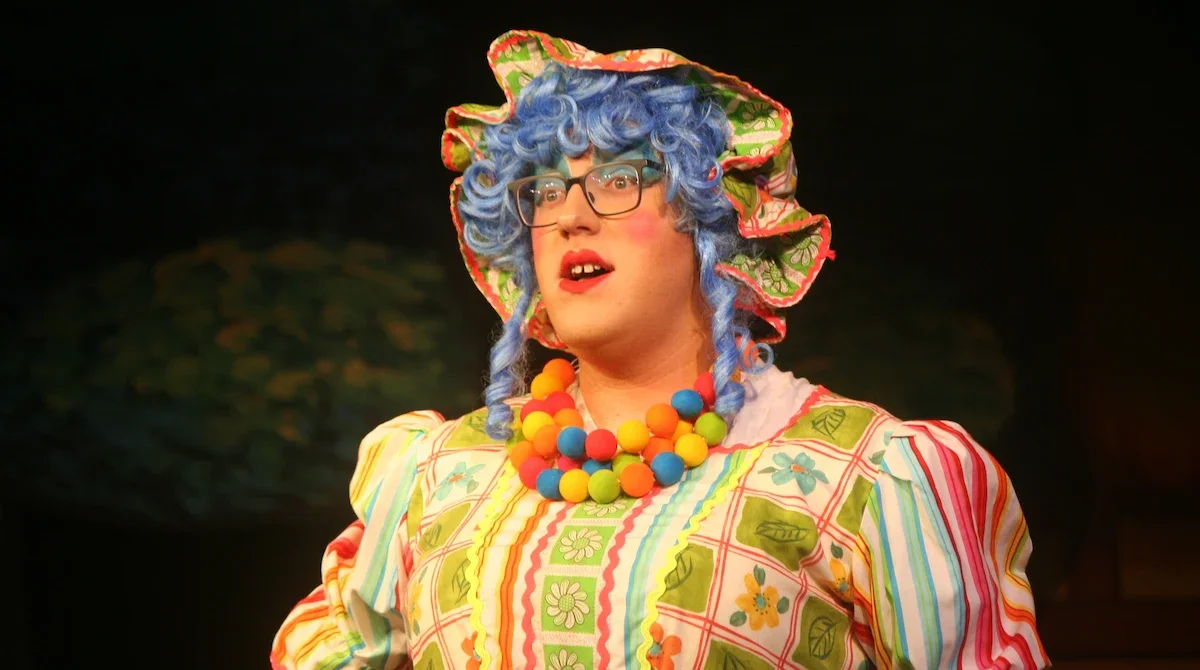
Dame costuming is its own art form, and getting it right does a lot of work before she's spoken a word. The principle is excess with coherence. The costume should be enormous, clashing and absurd, but it should also look like the Dame has made an effort, because she believes she looks wonderful. The comedy lives in the gap between her self-image and what the audience can see, and that gap only works if the costume has an internal logic, however deranged.
Classic elements include oversized wigs in implausible colours, hats decorated with anything from fruit to small animals to architectural features, dresses with exaggerated silhouettes, stockings, and shoes that manage to be impractical and confident at the same time.
Quick-change logistics matter more in amateur productions than most groups plan for. The Dame usually has several costume changes, and their speed needs planning as carefully as the costumes themselves. Build in Velcro, label everything, and rehearse the changes with a stage manager present until they can be done in the time available with a margin for error.
Directing the Dame
If you're directing rather than performing, your job is to create the conditions for the performance to work.
Give the Dame time in rehearsal to develop her relationship with direct address. It rarely happens naturally in the early stages, when everyone is focused on lines and positions, so schedule run-throughs where she can practise audience interaction with the rest of the cast standing in for a house.
Be honest in notes. The role attracts confident people, and confidence is what you want, but it can make performers resistant to direction. A Dame going too big in the wrong way, or landing her timing a beat off, needs to hear that clearly and without fuss.
Protect the slapstick rehearsal time. Slapstick scenes look like fun, so rehearsal groups treat them as fun and they don't get the focused technical work they need. Structuring them is work, and it needs scheduling like any other technical rehearsal.
The Dame and the Show
In a well-constructed script the Dame is load-bearing, not comic relief bolted onto the side. The laughs she generates give the rest of the story room to breathe, and the warmth she builds with the audience makes them care more about the hero's journey.
Getting her right takes time, the right casting, and a willingness to let someone take up a great deal of space. Do all three and your audience will remember her.
Every Dame we write starts from a job rather than a costume, which is why Widow Twankey has a laundrette and Dame Kitty Kipling has a bakery: a trade generates jokes all evening, where a frock generates one on entry. The Character Guides for Aladdin, Hansel and Gretel and Rapunzel each cover their Dame in detail if you want to see how that works in practice. Otherwise, browse the full catalogue of pantomime scripts, start from our home page, or request a free Perusal Script and read a title in full before you commit to anything. When you have chosen, our Performance Licences page covers the booking side.
Every dame in our scripts has been written with performance in mind, because that's the only kind of writing that actually works on a stage.