
The man, the legend, and the cat that never existed.
The history of Dick Whittington runs in three layers, and almost nobody keeps them apart. There’s the real man, the legend that grew up around him two centuries after he died, and the pantomime that grew up around the legend a century after that. I write the panto and I’ve read the other two, so here’s how they actually fit together.
The Real Richard Whittington
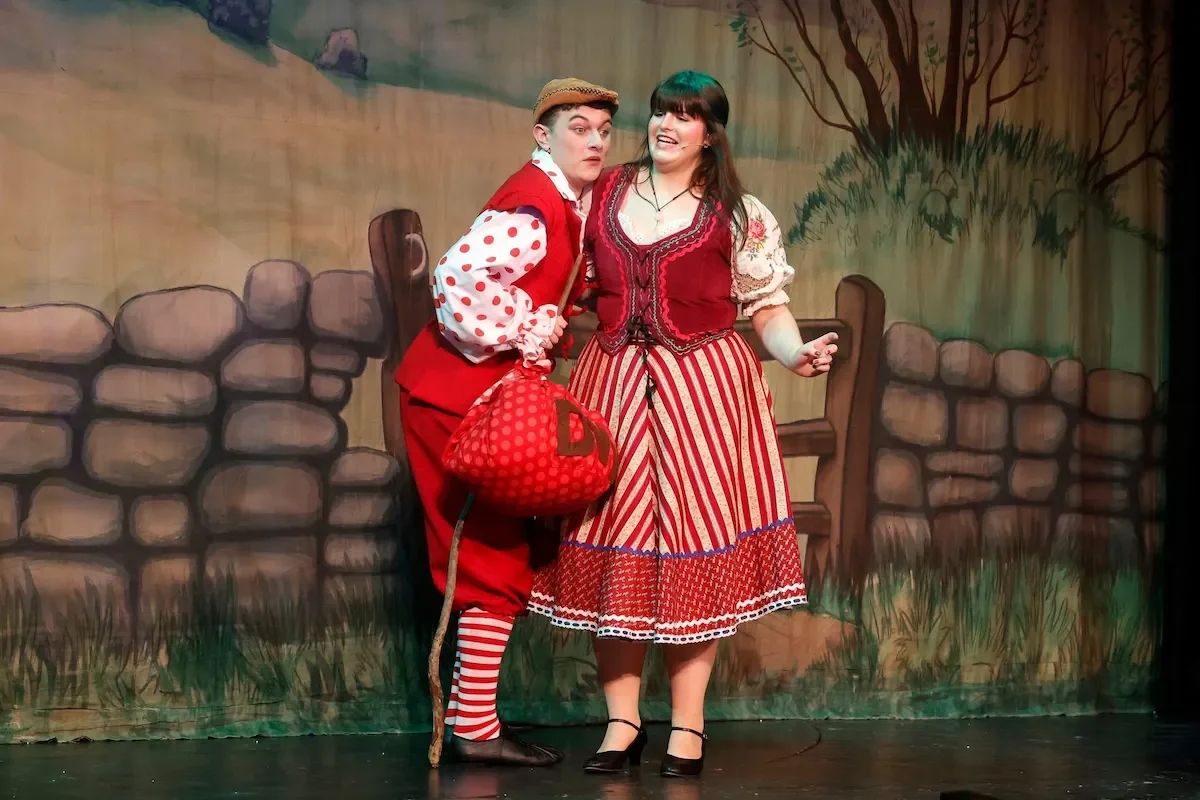
He was born in Pauntley, Gloucestershire, sometime in the 1350s, and made his money as a mercer, trading fine cloth to a clientele that included royalty, under three kings in a row. He served as Lord Mayor of London more than once, appointed by Richard II in 1397 to fill a vacancy and then elected in his own right that same year, and again in 1406 and 1419. Whether that’s three terms or four depends on which of the two 1397 appointments you count, and sources still argue about it. He married Alice FitzWaryn in 1402, at 48; she died nine years later, and they had no children. He died in 1423.
His will, dated September 1421, left around £7,000 to charity. It paid for rebuilding Newgate Prison, funding almshouses, the Guildhall’s first library, and repairs to St Bartholomew’s Hospital. There is no evidence he ever owned a cat.
The Cat Turns Up Two Hundred Years Later
Nothing connects Whittington to a cat until long after he was dead. A play and a ballad from 1604 or 1605 are known only by their titles now, both lost. What survives from 1605 is a line in the comedy Eastward Hoe, referring to ‘the famous fable of Whittington and his puss’ as something an audience would already know, which tells us the story existed without telling us what it actually said. The earliest surviving version that does tell it is Richard Johnson’s ballad of 1612, and Thomas Heywood turned it into prose in 1656, in a chapbook called The Famous and Remarkable History of Sir Richard Whittington.
It kept going as popular entertainment for a good while after that, well before anyone thought to put it in a pantomime. Martin Powell staged it as a puppet play in the early 1700s, and Samuel Pepys records seeing a Whittington puppet show himself in 1668. King Rat is almost certainly a pantomime invention rather than anything from the legend. The story needed a demon king to set against a good fairy, rats were an easy sell in a city that had watched the Great Plague go through it within living memory of Pepys’s diary, and the cat who catches him looks like an invention too.
The best-known scene in the legend has nothing to do with the cat at all. Dick, according to the story, ran away from a miserable apprenticeship and got as far as Highgate Hill before he heard the bells of Bow Church ringing out behind him, and took them to be telling him to turn again, since he’d be Lord Mayor of London three times over if he did. He went back, and the rest is the plot. Whether any of it happened is beside the point by now, but it’s the reason modern versions of Dick Whittington carry a character called Fairy Bow-Bells, doing in person what a peal of church bells did in the story.
The version most people actually know keeps going past the bells. Dick’s cat, in the story, had already been sent to sea aboard one of Fitzwarren’s trading ships, and the ship made landfall in a country overrun with rats, where a king who had never seen a cat paid a fortune for one that could deal with them. That’s where the money came from, and it’s why almost every panto telling of this story needs a ship on stage somewhere, cat included.
Grimaldi Puts Him on the Pantomime Stage
The first staged pantomime version opened at Covent Garden in 1814, and Joseph Grimaldi himself played the Dame. Her name was Cicely Suet, the Cook, not Sarah, and Sarah the Cook is the name that stuck rather than the one the role started with. I’ve written more about how the Dame herself developed in a separate guide to the pantomime Dame.
H. J. Byron wrote a version in 1862 with Dick chased across the stage by a villain in a hot air balloon, about as topical a joke as you could manage that year, since two English balloonists had just made the news for a record-breaking ascent. Augustus Harris staged it at Drury Lane in 1884 to 1885, with the book of words by E. L. Blanchard, in the same years he was busy inventing the celebrity guest star at the same theatre. The British Library still holds the performance music from three more productions into the 1890s, at Crystal Palace, the New Olympic Theatre and the Adelphi, three different venues within a single decade.
What We Kept
There’s a nice symmetry to the whole thing. The real Whittington never had a cat. The legend gave him one two centuries later. And I’ve given ours a name and a personality, Eileen, who gets a large share of the laughs across the whole show. Sarah the Cook runs the kitchen, King Rat runs the sewers with Frank and Sammy for company, and Alderman Fitzwarren and Alice are named for two people who really existed, even though the plot they’re in owes them nothing beyond the names.
If you’d like to meet these Dick Whittington characters properly, you can request a free Perusal Script and we’ll send it over. If you’re still deciding, have a look at our our pantomime scripts and home pages to see what else we’re offering.