
Sound and Music in Pantomime
Sound is one of those elements of a pantomime that the audience doesn't consciously notice when it's working well, and notices immediately when it isn't. A late villain sting, a sound effect that runs into the next line, an underscore that's too loud for the dialogue to be heard above it: these are all small things, individually, and they're all capable of doing disproportionate damage to a show. Getting the sound right isn't glamorous production work. But it makes an enormous difference.
The Villain Entrance
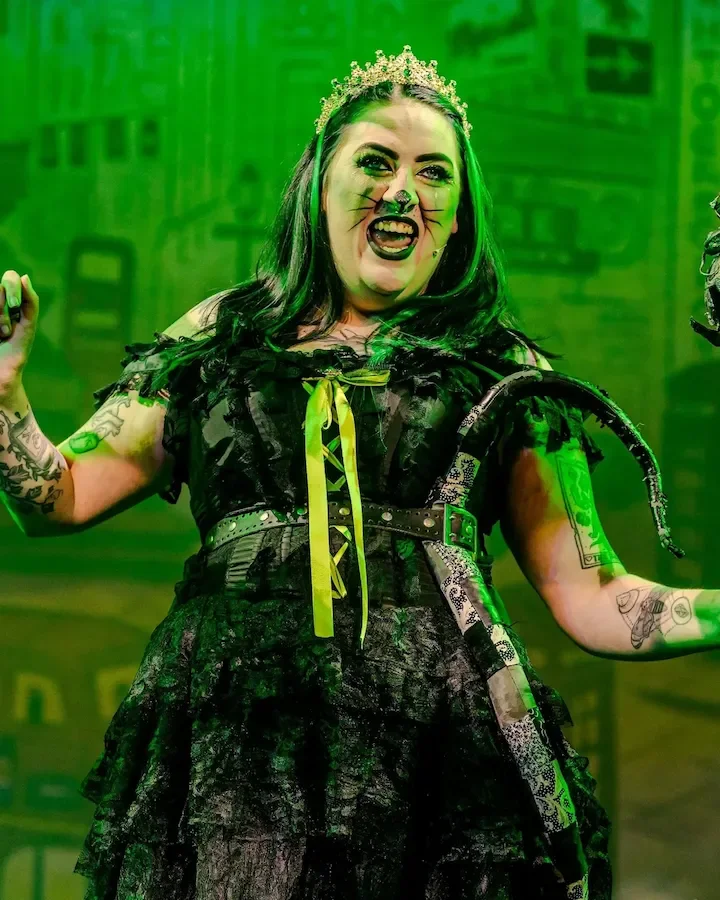
One thing most pantomime scripts have in common are great moments for the baddie to arrive on stage. From Abanazar in Aladdin to Carabosse in Sleeping Beauty, a villain’s entrance is a panto staple and the "dun-dun-dun" that signals their arrival will get the audience hissing and booing with relish. But the timing of that sting is everything. Too early and the effect happens before the audience has registered who's arriving. Too late and the moment has already passed. Right on time, just as the villain becomes fully visible to the house, that's when it works, when the sound confirms what the eye has just seen and the audience responds instinctively.
The same principle applies to any musical cue tied to a specific moment: a magic spell, a transformation, a reveal. The cue should feel like it's happening simultaneously with the action, not following it. Have that conversation with your sound operator early and specifically: here is the cue, here is the exact moment it goes, here is what you're listening for as the trigger.
The Ba-dum-tish
If you're lucky enough to have a live drummer in your band, the joke drum hit, the classic ba-dum-tish after the Comic's worst gag, is one of the most reliable laughs in the show, and it costs nothing. It works because it acknowledges the joke in a way that signals the audience that the performers are in on the joke too. It's the musical equivalent of a raised eyebrow.
If you're working with pre-recorded sound effects rather than live musicians, you can achieve something similar with a well-placed sound effect, but the timing needs to be even more precise, a live drummer can react to the room and adjust; a pre-recorded hit goes when it goes, so the cue point needs to be absolutely nailed in rehearsal.
The ba-dum-tish also works for a range of situations beyond the explicit gag: pratfalls, sight gags, and any moment where the audience is likely to find the physical action inherently funny. It punctuates without over-explaining.
Underscore and Atmosphere
Music played under dialogue, or underscore, is one of the most effective mood tools available to a production, and it's very often absent from amateur pantomimes because it requires either a live band that can read the action or pre-recorded tracks that have to be faded in and out in real time. Both are manageable, but they need to be planned.
For romance scenes, a simple underscore in a warm key played softly under the dialogue can do more for the emotional register of the scene than almost any direction you could give the performers. For tension scenes, a sustained quiet dissonance. For comic scenes, particularly the Dame's monologue or the front-cloth double act, silence is often correct, because the comedy needs space to breathe and music underneath can muddy the rhythms.
If you have a live band, talk to them specifically about underscoring. Not every MD will do this automatically, some will treat it as a sung score and nothing else. But a good band can lift the non-musical moments of a show significantly, and the conversation is worth having.
For pre-recorded sound, build your sound design before tech week and test it in the space. What sounds balanced in headphones or on a laptop speaker may be completely different in the actual venue. The acoustics in a village hall are different from those in a purpose-built theatre, and your sound operator needs to know the space well enough to make adjustments on the fly.
Magic and Transformation Cues
Magic is one of pantomime's most reliable pleasures, and the right sound cue makes it land properly. A transformation scene with no musical acknowledgement feels flat; with a rising shimmer or a tinkly motif, it becomes a moment. Whatever the specific sound, something should happen aurally at the moment of transformation, and it should feel like the sound is part of the magic rather than an afterthought.
Brief is usually better. A two-second shimmer that coincides with a lighting change is more effective than a 10-second orchestral swell that holds the action up while it plays out. The magic should feel instant; the music should underline it, not extend it.
Brief Your Sound Operator Properly
Finally, and most practically, your sound operator needs a proper brief, not just a cue sheet. A cue sheet tells them what to play and when; a brief tells them why, and what each cue is supposed to achieve. A sound operator who understands the shape of the show can make good decisions when something unexpected happens, a line goes early, a scene runs long, a performer improvises. A sound operator who is just following a list cannot.
Sit with them before technical rehearsals and go through the show cue by cue. Explain what each sound is meant to do, not just when it triggers. Make it clear which cues are absolute (the villain sting must go the second they're visible) and which are flexible (the underscore can fade as the scene develops). That conversation will save a lot of problems in the tech.
For song suggestions to accompany your musical numbers, the Panto Songs page is a good starting point, it covers a wide range of occasions and has been built up over many productions.
If you'd like to read through a script and see how the sound and music cues are structured, request a free Perusal Script from the full catalogue. Any questions about staging, sound, or technical production, get in touch.
You can also visit our Homepage and our Frequently Asked Questions, both of which have lots of answers and useful links.