
Everything you need to know before you say yes to your first panto.
Directing pantomime for the first time is a very different job from directing any other kind of theatre, and that's true whether it's your first time directing anything or your twentieth production with a company. Most of what makes panto different from the shows you already know how to direct is exactly what's worth knowing before you say yes to it.
Panto forgives things other theatre doesn't
The first thing worth knowing is that pantomime is unusually tolerant of a wobble. An audience at a panto has come to shout, laugh and be part of the show, not sit in critical silence, so small mistakes, a dropped line, a prop that doesn't quite work, rarely derail the evening the way they might in a straight play. That's not the format granting permission to under-rehearse, but it is a reason not to be intimidated by the scale of what you're taking on. The format is built to carry you.
Choosing your first script
If this is your first panto, we'd lean toward a well-known story over an unusual one. Audiences bring goodwill to a title they already recognise and you’ll likely have a good understanding of where the script is heading, which takes pressure off the production having to sell the story from scratch, Cinderella and Aladdin both do this reliably well. If you do want to take on a lesser known story then you still can. if you know it well enough and you have the ideas, then there is no reason you can’t do a more unusual title like Alice in Wonderland or The Little Mermaid. You can find our scripts categorised by traditional and unusual pantomime script titles as well as by those suitable for Easter and Summer. Or feel free to browse the full panto script catalogue.
Cast size is worth being honest with yourself about too, before you fall in love with a script that needs more people than you can currently cast. Scripts like Beauty and the Beast and Hansel and Gretel keep the cast list tight, which is easier to manage on a first attempt than a sprawling one, since you're learning how to run a production at the same time as directing it. If you do have the numbers, a bigger cast like Robin Hood gives you more to work with, more principal characters to spread the workload and the stage presence across, which some first-time directors actually find easier to manage than a tiny cast carrying the whole show. Our small, medium and large cast pages are a good starting point either way.
The roles that carry the comedy
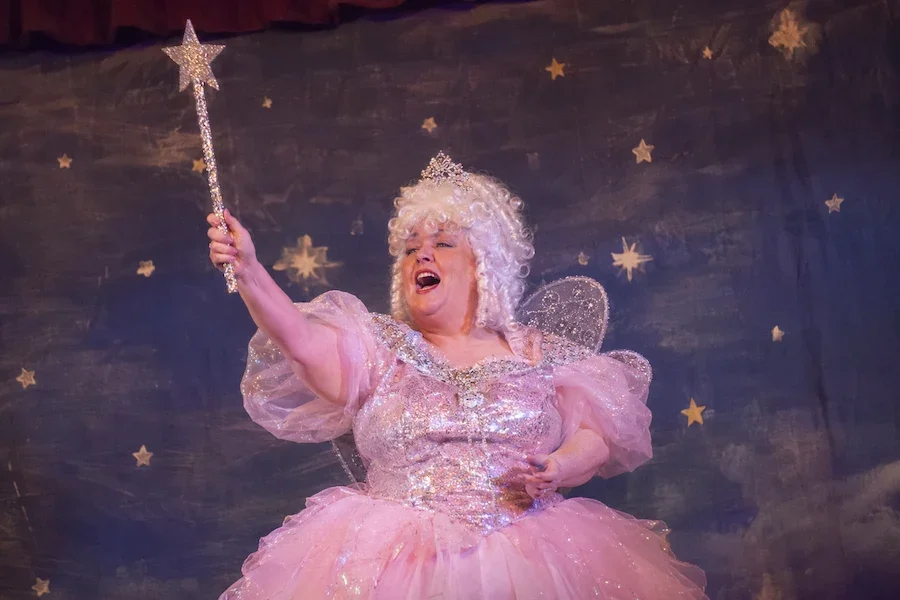
Every pantomime leans on a small set of character types to do most of its comic work, and understanding them before you cast will save you a lot of second-guessing. The Dame is the emotional and comic anchor of the show, usually played by a man, built around direct address to the audience and a strong rapport with the crowd. The villain needs someone committed to being booed rather than someone playing it safe. Beyond those two, most scripts give you a comic duo whose chemistry matters more than either performer's individual material, Rapunzel’s Drip and Dribble or Robin Hood's Bluff and Blunder are a good example of what that looks like when it's working, two henchmen whose uselessness compounds rather than cancels out.
What rehearsals will actually feel like
Pantomime rehearsals spend more time than most theatre on timing rather than emotional truth, because so much of the comedy depends on exact beats. Rehearse audience participation routines specifically and repeatedly, since a routine that's under-rehearsed reads as awkward rather than warm on the night. Most of our scripts are also built with Front of Tabs scenes, short scenes played in front of the closed curtain, specifically to cover bigger changes happening behind it, which takes a lot of the backstage pressure off a first-time crew if you use them as intended. For more on pacing once you're properly into rehearsals, our post on keeping a pantomime running to time is worth a look.
Audience participation is not optional extra work
If you're coming from other kinds of theatre, direct audience address can feel like the strangest part of the job to direct. Treat it as seriously as any other part of the script rather than as filler between real scenes. Most routines are built on a three-stage structure, quiet, better, loudest, then move on, and your audience already knows this instinctively even if they've never thought about it. Some participation goes further than a simple catchphrase. In Aladdin, the audience shout “Frankie Twinkie’s Manky Hanky” to remind Widow Twankey about her late husband’s handkerchief, and their shout actually helps resolve the plot in the final scene. In Sleeping Beauty, Gerald the Herald's fanfare troubles turn into a similar back-and-forth with the crowd. Both are about as purely pantomime as comedy gets, the audience isn't just watching, they're doing some of the work.
Getting started
The most useful thing you can do before committing to a title is read the whole script, not just a synopsis, so you know exactly what you're taking on. Request a free Perusal Script for anything that catches your eye or browse all our pantomime scripts to compare cast sizes and stories side by side.
New to our funny pantomime scripts? The home page is a good place to get your bearings, or if you’ve got questions, you can see our FAQs or Contact Us.