
Best Pantomime Scripts for Medium Casts
If you're not trying to find parts for 40 performers or making a virtue of doing it with 10, you're probably in the situation that most amateur dramatics societies and youth theatre groups actually face: a company of somewhere between 20 and 35 people, a mix of experience levels, and a reasonable number of performers who want a proper named role.
That's the medium cast sweet spot, and it's where six of our scripts live: Cinderella, Dick Whittington, Goldilocks and the Three Bears, The Little Mermaid, Pinocchio and Sleeping Beauty. Each has between 10 and 13 principal characters, enough to give your strongest performers a substantial part each, with a supporting and ensemble cast behind them that doesn't need to be enormous to feel right.
| Script Title | Principal Characters | What Makes It Work |
|---|---|---|
| Cinderella | 11 | Most female-weighted principal cast in the catalogue |
| Dick Whittington | 11 | Clearest ensemble faction: the villain's own rat gang |
| Goldilocks and the Three Bears | 13 | Only script set in a circus |
| Pinocchio | 9–10 | Most distinct worlds: five separate settings |
| Sleeping Beauty | 10 | Fewest principals in the medium band; striking ensemble wake-up scene |
| The Little Mermaid | 12 | Two distinct worlds: underwater and surface, each with its own ensemble |
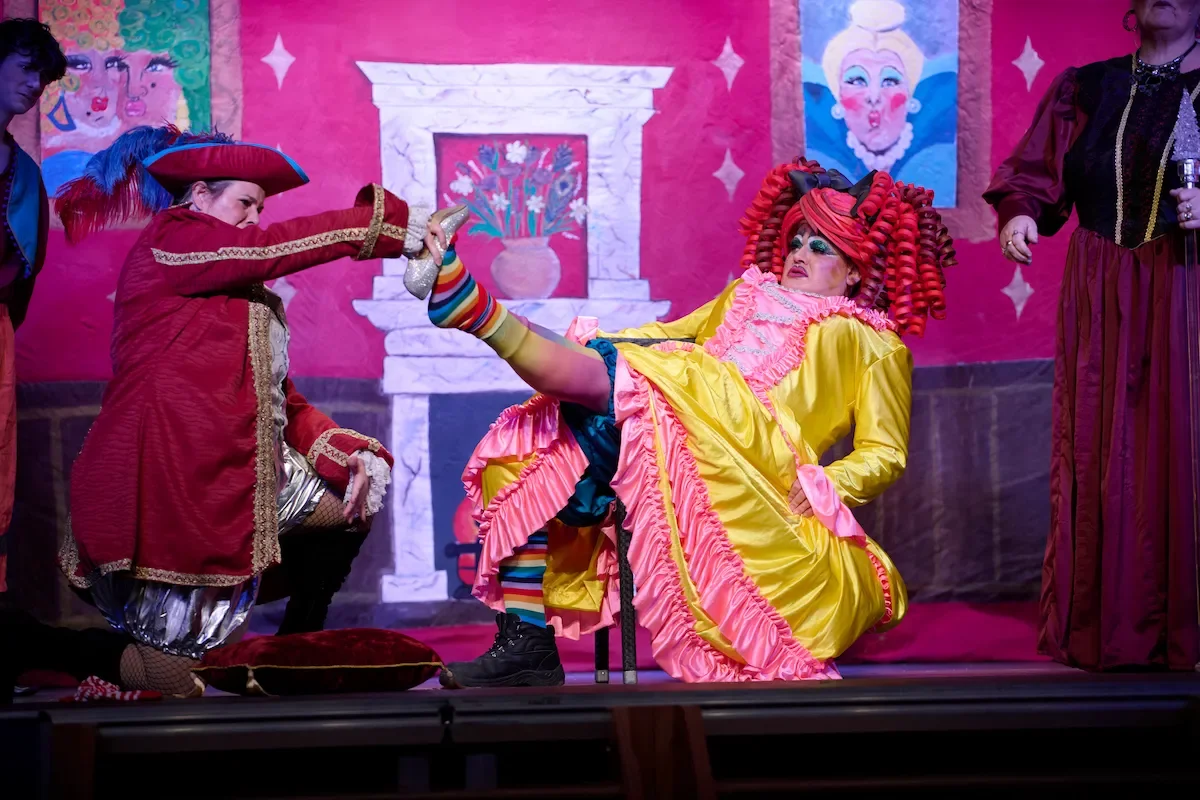
Cinderella: 11 principals, and the most female-weighted principal cast
Cinderella has 11 principal characters: Cinderella, Buttons, Fairy Sparkles, Baron Hardup, Baroness Hardup, Ammonia, Amnesia, the Prince, Dandini, and the Fairy Godmother on the edges of that count. The Fairy Godmother appears in fewer scenes than you might expect because Fairy Sparkles, her intern, actually carries more of the comedy and stage time.
The character split matters for groups where casting gender is a consideration. Cinderella, Fairy Sparkles and Baroness Hardup are fantastic female roles, and Grabbit, Runn, Dandini and the Emcee can easily be played by women too, not to mention the Prince who can be played by an actress in the principal boy tradition. If your group has more female members than male (which is common across amateur dramatics), this is one of the more naturally flexible scripts in the catalogue.
The ensemble in Cinderella covers a lot of ground: mice-turned-footmen in the transformation scene (a children's favourite), townsfolk, and ball guests. The ball guest names can be localised to your area, it reliably gets a laugh from the audience when they hear a familiar name.
Dick Whittington: 11 principals and a villain ensemble
Dick Whittington has 11 principals: Dick, Alice, Dame Sarah Snafflebratt, Idle Jack, Alderman Fitzwarren, Eileen the cat, King (or Queen) Rat, Frank, Sammy, Captain Watt, and Fairy Bow-Bells. King Rat is explicitly noted in the script as interchangeable with Queen Rat, which is a casting decision rather than a rewrite.
The structure of this script is slightly different from the others in this band because the villain has a whole gang behind them: King Rat with Frank and Sammy as named hench-rats, plus rat ensemble behind them. That gives your ensemble a clearly defined faction with a costume identity, which tends to produce more engaged ensemble performers than a "townsfolk" chorus. Sailors, pest controllers, and Moroccan traders add further distinct groups across the script's two acts.
Captain Watt is a substantial role that sits primarily in the ship scenes, and leads the Mop Drill, a hugely popular classic panto set piece. He (or she!) is a brilliant role for a strong performer who you want to feature prominently in one section of the show.
Goldilocks and the Three Bears: 13 principals, and the only script set in a circus
Goldilocks and the Three Bears has 13 principal characters, the highest in the medium cast band, and the most distinctive ensemble identity of any script at this level: it is set in a circus. Even with a modest ensemble, circus performers have something specific to be, which tends to produce more engaged performers than a generic crowd of citizens
The principal roster is varied in type. Dame Bernie Barnum runs Barnum's Circus, which anchors the comedy in the setting from the start. Madam Meanie, the rival circus owner, comes with Bean as her sidekick, making the villain strand a natural double act. Daddy Bear, Mummy Bear, and Baby Bear are individually characterised with distinct comic personalities rather than functioning as a single shared bear presence.
Charlie and Cooper, the identical twin clowns, are played by one actor with a wig change: a staging mechanic that requires an identically costumed double but no second casting slot for a lead. Ringo the Ringmaster, Sampson the strongman, and Jessie the juggler sit at the named-character end of the ensemble and give performers who want more than background work something specific to play. The circus setting handles additional ensemble performers naturally, but it does not require them: the script holds its shape with a compact group.
The Little Mermaid: 12 principals, and a heroine who spends half the show without a voice
The Little Mermaid has 12 principal characters: Ariel, Prince Evan, Dame Beluga, Scampi, Queen Marina, Octavia, Lobster Theodore, King Godfrey, Willis, Slip, Slap, and the Spirit of the Sea. That's just below Goldilocks and the Three Bears for the highest principal count in this band, with five supporting roles behind it, Ariel's sisters Persil, Daz, Lenor, and Own Brand, plus a new arrival in Annette, giving a group more named parts to hand out beyond the principal cast.
The character everyone will remember is the one who spends half the show unable to speak. Octavia's bargain with Ariel, legs for a voice locked inside a seashell, means your Ariel goes silent partway through the show while her voice travels between other cast members through a spotlight and some careful lip-syncing. It's a genuinely different demand from anything else in this cast band: whoever plays Ariel has to carry a whole plot without a line, and whoever the spotlight reaches next needs the nerve to mime somebody else's dialogue in front of a live audience.
Ariel's own costume is the other job worth planning early. She's a mermaid with a tail in the underwater scenes and has ordinary human legs from the moment Octavia's bargain takes hold, so the transformation needs to read clearly rather than happen out of sight. Slip and Slap give Octavia a hapless henchman double act, and the Ensemble covers mermaids, sea creatures, sailors, citizens, guards and a jellyfish who leads Dame Beluga through the show's classic behind-you scare.
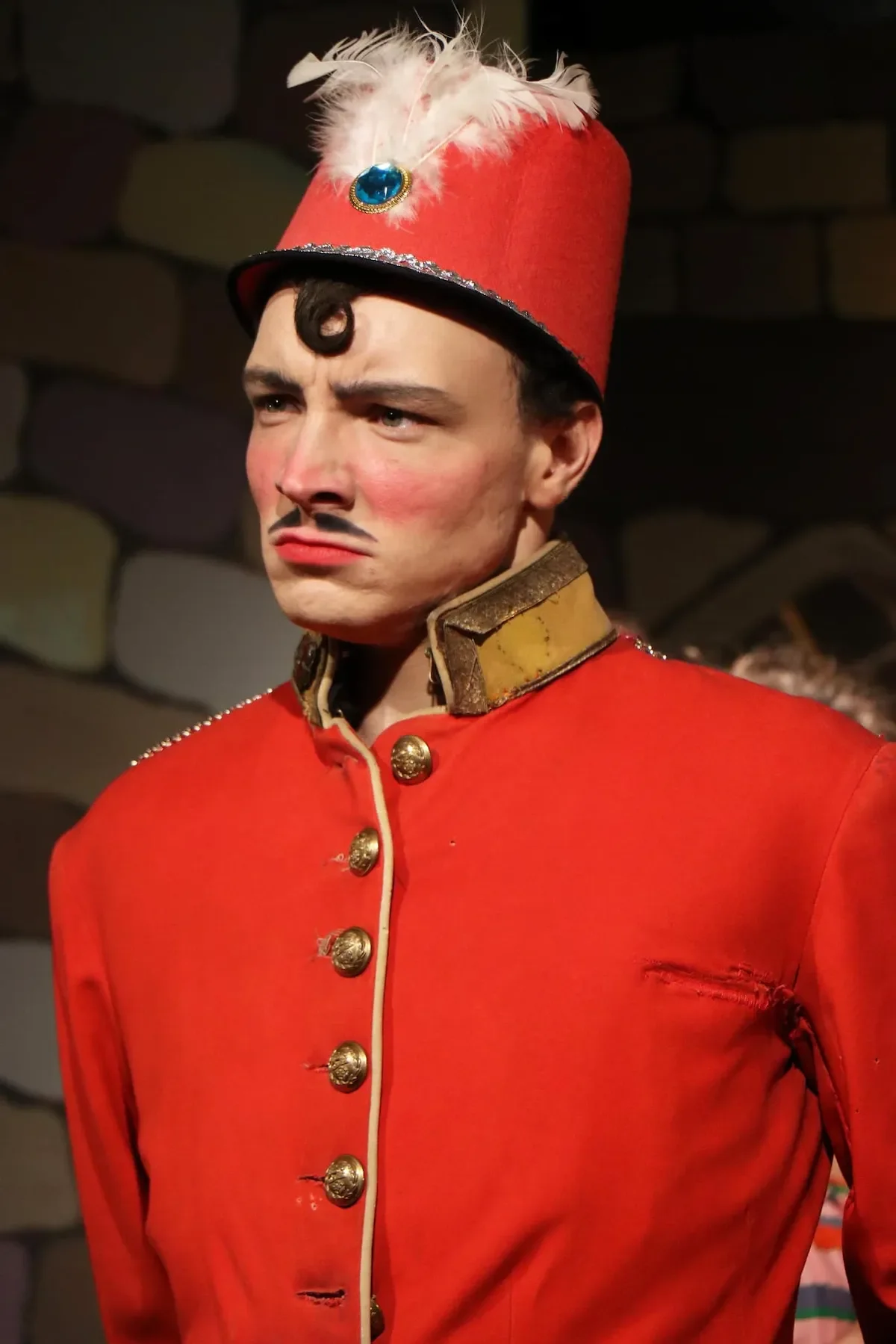
Pinocchio: nine principals with scene-specific featured roles
Pinocchio sits at 9 or 10 principals depending on whether you count Mrs Johnson, the schoolhouse teacher, as principal or supporting. She is pivotal to her scene and a unique take on the nose-growing sequence, a key part of the Pinocchio story, she's worth casting carefully regardless of the label.
What makes Pinocchio distinctive in the medium cast group is the range of worlds. You move from a town square to a carpenter's workshop, a schoolhouse, a circus, and underwater: five distinct settings with five distinct ensemble costume requirements. Horace, Charlie, and Sandy are half-donkey circus performers who are essentially ensemble members given featured roles for one scene. The circus also includes the Ringmaster, a backup-baddie and Flummox, the megaphone voiced announcer for the Mayor who works well with a interactive ensemble.
Fairy Solid is the villain, and just like King/Queen Rat in Dick Whittington, can be a male or female sibling to the squeaky-clean Fairy Liquid, the good fairy.
Sleeping Beauty: 10 principals and a 100 year long interval
Sleeping Beauty has the fewest principals of any script outside the small-cast group: 10. Gerald the Herald, the King, Queenie (the Dame), Princess Aurora, Prince Juan, Carabosse, Plum, and the three good fairies Silk, Cashmere, and Velvet.
What lifts it out of the small-cast band is that the script is written around a court, and a court needs people in it. The sleeping-courtiers scene in Act Two, where the entire ensemble is waking up simultaneously after a 100 year slumber, is one of the more striking visual sequences in the catalogue and needs enough bodies on stage to make the joke land. The comic princes, suitors for Aurora who can be named after local towns and landmarks, are walk-on ensemble roles that work for performers who want a character identity without significant lines.
The three good fairies are three distinct named roles with proper stage time, which is useful if you have three performers of similar experience level who all want something visible and characterful.
Choosing between them
All these pantomime scripts share a cast band but they're quite different shows. If you'd like to see the full range in one place, the pantomime scripts catalogue covers every title we publish. Cinderella and Sleeping Beauty are the most female-principal-weighted. Dick Whittington gives the ensemble the clearest faction identity. Pinocchio has the most distinct worlds to dress and has the strongest built-in case for including children across multiple ensemble groups. Goldilocks and the Three Bears and The Little Mermaid both work well with larger ensembles, and have some of the more challenging costume requirements in the catalogue.
If your company is more compact, one of our Small Cast Scripts might suit you better; if you have a larger group with lots of ensemble energy, then check out our Large Cast Scripts instead.
Once you’ve found something you’d like to read, request a free Perusal Script and see for yourself.
If you’ve got questions, please visit our Homepage, which has plenty of helpful links, check out our Frequently Asked Questions, or Contact Us.